How to Locate Vertical Asymptotes Within a Function
This article assumes that you understand what a vertical asymptote is, which you can read about here .
Up until now you’ve probably only learned how to solve for vertical asymptotes graphically—that is, plotting the graph either by hand or using an online graphing calculator like desmos.com and kind of guessing where the vertical asymptotes are. Although this is a strategy for finding vertical asymptotes, it is both impractical and unreliable.
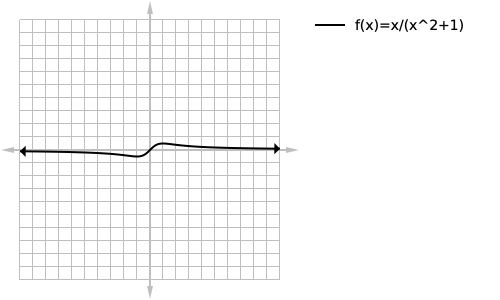
For example, take the function as shown below. This function kind of looks like it could have a vertical asymptote.
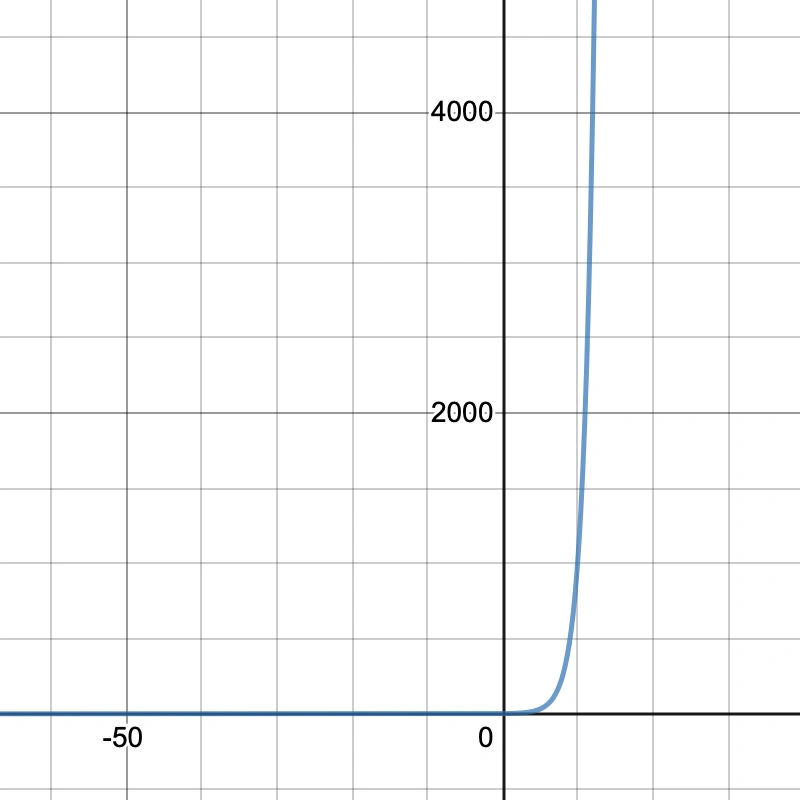
But in reality it does not, as no matter where you choose to place your vertical line representing your asymptote, if you zoom out on your graphing calculator, will always intersect with your line. This is because the domain of is —therefore it can never have a vertical asymptote, as no matter where you place your vertical line the function will always intersect it.
Rational Functions
To find vertical asymptotes within rational functions, you should start by solving for when the denominator equals zero. If the denominator never equals zero, then your function is likely continuous for its entire domain and has no vertical asymptotes.
Once you have found the “roots” of the denominator, you want to plug those numbers into the numerator. If the numerator is non-zero, you have a vertical asymptote. If it is zero, you have what’s known as the indeterminate form , which represents a hole in the function.
Example:
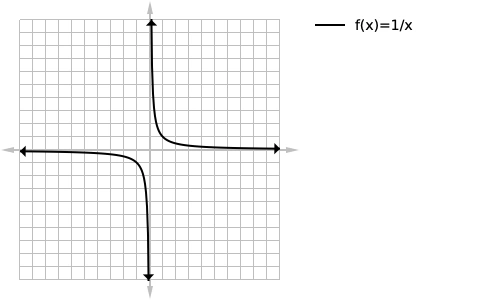
We can see that the graph approaches but never reaches x=0 as shown with the dashed line:
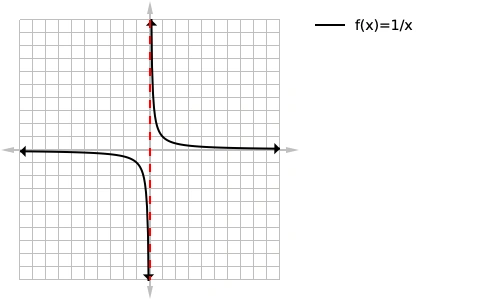
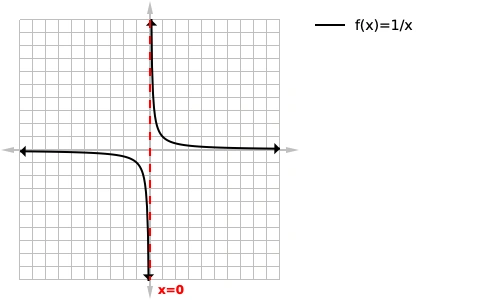
We can then solve for the equation of this vertical asymptote by solving for when the denominator of the function is equal to zero—in this case it is zero. We then want to label our asymptote at the bottom of the page next to the asymptote with its equation:
Example:
We want to start off by solving for when our denominator is equal to zero:
We then want to plug this into our numerator and see what the result is:
Since the numerator is zero, we can conclude that this is not a vertical asymptote but instead a hole as shown in the image below (where the circle represents the hole in our function):
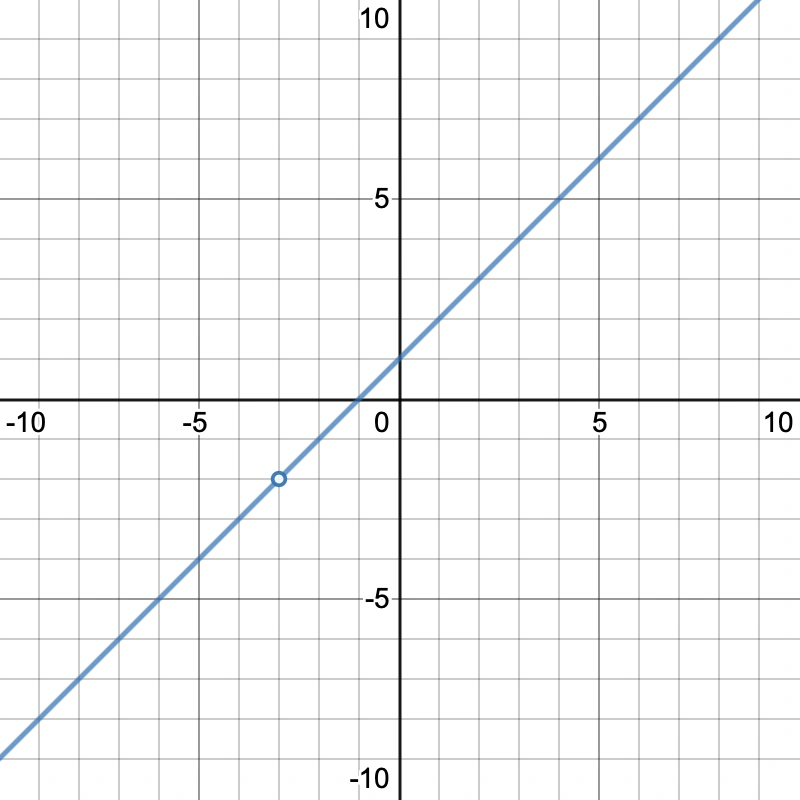
This could have also been determined by either graphing, plugging in numbers close to where you believe the asymptote would be and recognizing that it isn’t going toward infinity (as demonstrated in the table above), or by seeing that the numerator and denominator have the same factor and canceling those out as follows:
Example:
Has no real solutions, telling us that the function will not have any vertical asymptotes.
Example:
We will start by solving for when the denominator is equal to zero:
We are then going to plug -2 into our numerator and see what we get:
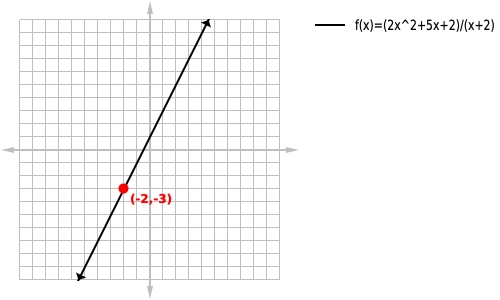
Since the numerator is zero, we can conclude that this is not a vertical asymptote but instead a hole as shown on the graph below:
Example:
We will start off by setting the denominator equal to zero and solving:
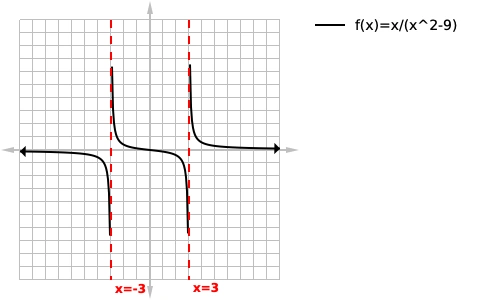
We are then going to plug -3 and +3 into our numerator and see what we get: we get -3 and +3. Since neither of these are zero, we can conclude that our function will have two vertical asymptotes, one at -3 and one at +3:
Example:
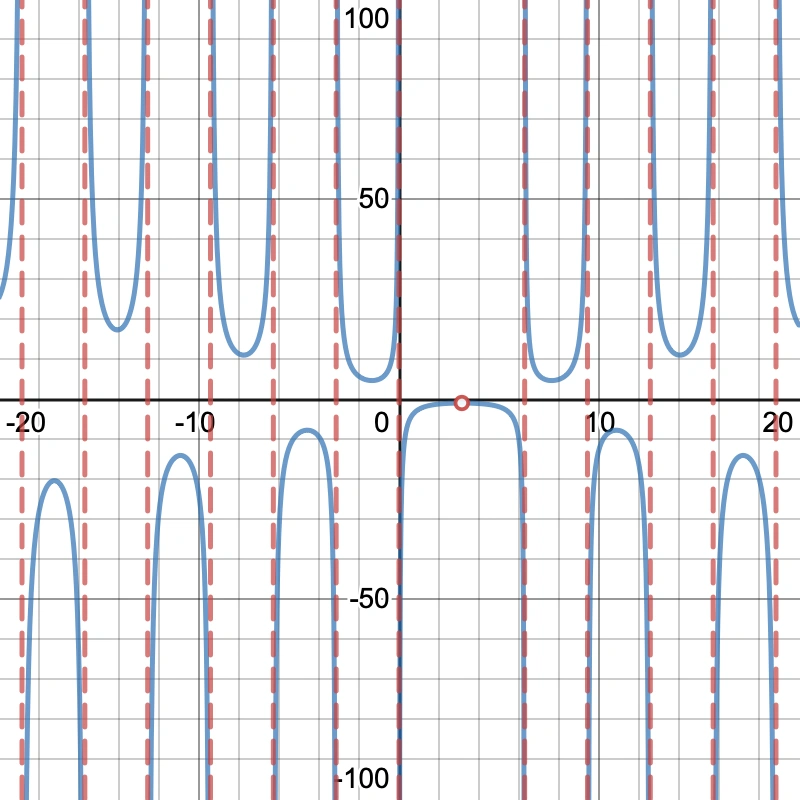
We will start off by setting the denominator equal to zero and solving:
for any integer value of k. That is, this function has infinitely many zeros and they are all the multiples of π.
Since we can’t realistically plug in infinitely many values into our numerator, we will instead find the zeros of our numerator and compare the two:
Since both our numerator and denominator have a zero when , we can conclude that that will be a hole in our function and that our vertical asymptotes will be all the other zeros of our denominator.
Therefore our vertical asymptotes are at the following locations:
And our only hole will exist at .
Trigonometric Functions
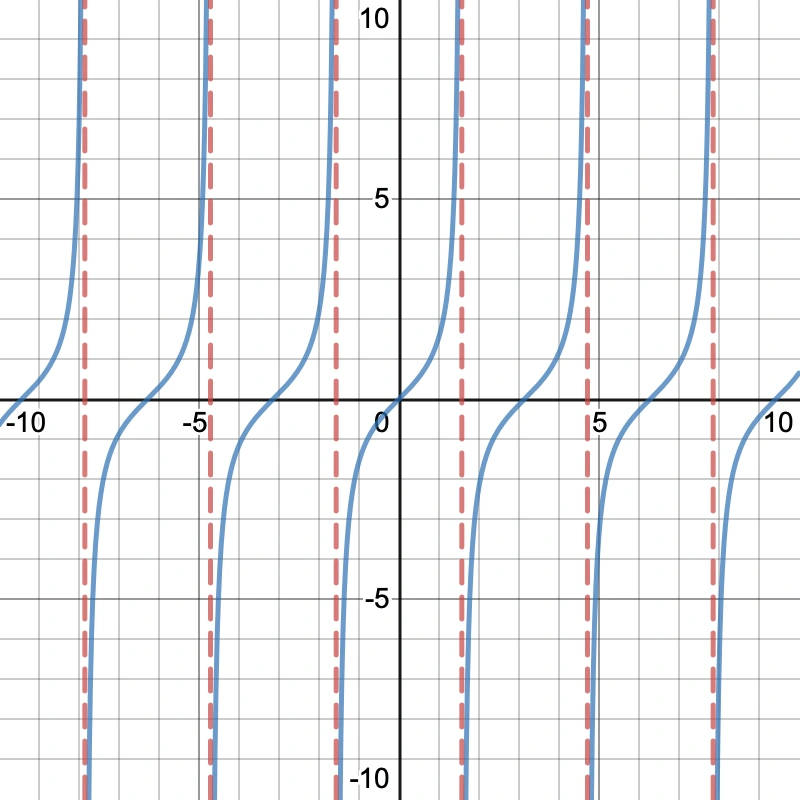
Some trig functions will also have their own vertical asymptotes, such as , which has infinitely many vertical asymptotes at:
where k can be any integer.
If you ever forget, you could always remember that and try to solve that as demonstrated above.
Many other trig functions such as all the reciprocal ones (, , ) have vertical asymptotes. But these are all fairly easy to solve as long as you think of them as rationals and follow the steps shown above.
Pro Tips
- Make yourself comfortable solving quadratic and cubic equations and factoring
- Don’t forget to verify that the zero in the denominator is in fact an asymptote
- Don’t forget that some functions like have an infinite number of vertical asymptotes
- Use a graphing calculator/desmos.com to verify your solutions
THANKS FOR READING